Hot Water Systems Sized for Actual Demand
Water Heater Installation in Marcy for properties replacing aging equipment or expanding capacity
Hot water requirements differ between a three-person household and a commercial kitchen, between a single-bathroom home and a multi-unit rental property, and equipment selection must account for peak demand periods rather than average daily use. Water heater installation addresses equipment replacement when existing units reach the end of their service life, when household size or business operations change, or when property owners choose to transition from storage tank models to tankless or heat pump water heater technology. Allied Heating and Air Conditioning handles water heater installation for residential and commercial properties across Marcy, focusing on proper sizing, fuel type compatibility, and installation standards that support long-term performance.
Installation decisions begin with evaluating current hot water usage patterns, identifying peak demand periods, and calculating recovery rate requirements to ensure the new system can meet those needs without running out mid-cycle. Aging equipment often shows visible signs of decline—rust stains near the tank base, reduced hot water duration, or higher fuel bills—that indicate replacement should be considered before a catastrophic leak occurs.
Arrange a water heater consultation to review equipment options and discuss sizing requirements based on your property's hot water usage.
What Proper Installation Requires
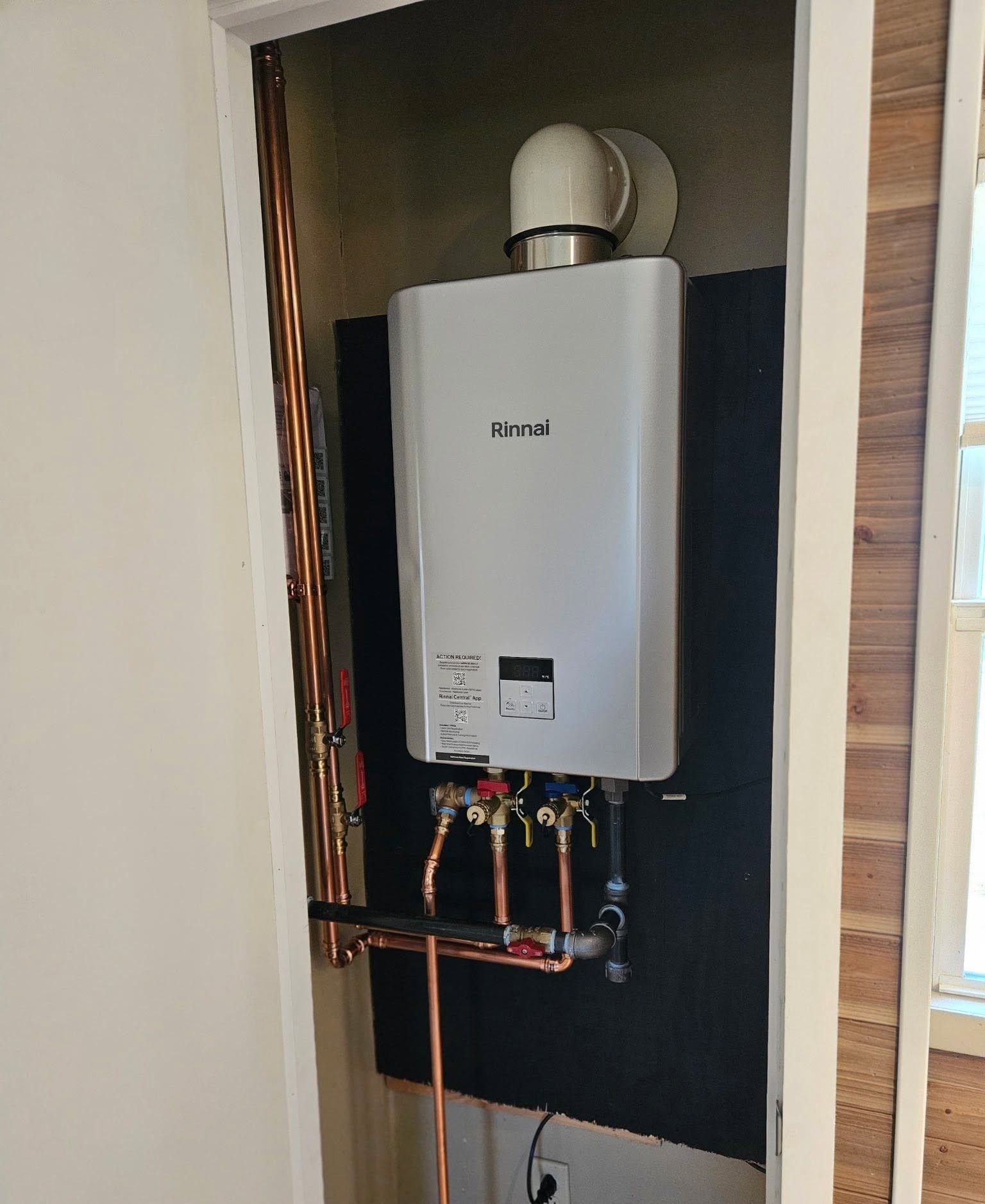
Water heater installation involves removing the old unit, verifying that supply and vent connections meet current code, installing the new tank or tankless unit with proper clearances, and testing temperature and pressure relief valve operation before the system goes into service. Tank water heaters require adequate floor support and drain pan installation to contain leaks, while tankless models demand sufficient gas line capacity and venting sized for higher BTU input rates. Commercial installations often include recirculation pumps, expansion tanks, and mixing valves to prevent scalding at high-demand fixtures.
After installation is completed, properties regain consistent hot water availability, reduced waiting time for water to reach temperature, and lower standby energy loss if upgrading from an older, poorly insulated tank. New equipment operates more quietly, maintains more stable outlet temperatures, and eliminates the risk of sudden cold-water interruptions during showers or dishwashing cycles.
System selection considerations include fuel availability—natural gas, propane, or electric—along with space constraints, venting requirements, and whether the property would benefit from hybrid heat pump technology that extracts heat from surrounding air to reduce operating costs. Financing options are available for equipment upgrades, and proper installation ensures warranty coverage remains valid throughout the manufacturer's specified term.
Common Questions Before Installing New Equipment
Homeowners and business operators in Marcy often ask about equipment options, installation requirements, and system longevity when planning water heater replacement projects.
How is water heater capacity determined for a home or business?
Capacity is calculated based on the number of occupants, simultaneous fixture use patterns, and peak demand periods—residential properties typically require 40 to 80 gallons of storage capacity, while commercial applications may need multiple units or tankless systems rated for continuous high-volume output.
What installation factors affect long-term water heater performance?
Proper venting to prevent backdrafting, adequate clearance for maintenance access, correct temperature and pressure relief valve placement, and secure mounting to prevent movement during seismic or settling events all influence how reliably the system operates over its lifespan.
When should a property owner consider tankless instead of tank-style water heaters?
Tankless models suit properties with limited installation space, households that experience frequent hot water shortages, or buildings where eliminating standby heat loss reduces operating costs—however, they require higher gas input rates and may need electrical upgrades for larger residential or commercial applications.
Why do water heaters in Central New York require expansion tanks?
Closed-loop plumbing systems with backflow prevention devices trap thermal expansion, and without an expansion tank to absorb pressure increases, relief valves discharge prematurely and system components experience accelerated wear.
How long does a typical water heater installation take in Marcy?
Residential tank replacements are usually completed within a few hours, while tankless installations requiring gas line upgrades or electrical work may extend to a full day, and commercial projects depend on equipment size and distribution complexity.
Allied Heating and Air Conditioning works with property owners throughout Marcy to install water heaters sized and configured for residential and commercial hot water demands. Call Allied Heating and Air Conditioning at (315) 404-8264 to schedule an installation consultation and explore equipment options with financing availability.